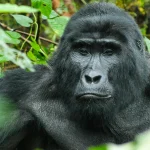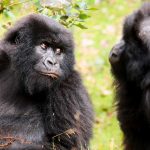

Mountain gorillas in Uganda without a doubt, represent one of the most powerful wildlife encounters on earth. Deep within ancient rainforests, these endangered primates live in close-knit families and thrive under strict conservation protection. More importantly, Uganda shelters over half of the world’s remaining mountain gorillas, making it the ultimate destination for gorilla trekking in Africa.
Unlike any other wildlife experience, meeting Uganda gorillas face-to-face transforms how travelers understand nature. Not only do visitors observe their strength, but they also witness their gentleness and intelligence. Therefore, gorilla trekking in Uganda is not just a safari activity; instead, it is a life-changing conservation journey.
Because Uganda protects vast tropical forests, mountain gorillas continue to grow in number. Consequently, Bwindi gorillas and Mgahinga gorillas now attract wildlife enthusiasts from across the globe. As a result, Uganda stands as a global leader in mountain gorilla conservation.
Fundamentally, mountain gorillas live in stable family groups. Typically, each gorilla family consists of one dominant silverback gorilla, several adult females, juveniles, and infants. Occasionally, a group may include subordinate blackbacks.
At the center of every gorilla family stands the silverback gorilla. Because he develops a silver patch of hair on his back with age, he earns that title. More importantly, he leads, protects, and makes decisions for the group. For instance, he determines feeding areas, resting times, and movement direction. Furthermore, he defends the family against threats.
Meanwhile, mother gorillas nurture and protect their babies with remarkable dedication. Constantly, infants cling to their mothers for the first months of life. Gradually, juveniles begin to explore and play. Through play, young gorillas learn climbing, social bonding, and communication skills. Consequently, the family structure remains strong and cohesive.
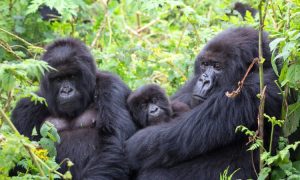
Generally, mountain gorillas in Uganda display peaceful and social behavior. Although their size appears intimidating, they rarely show aggression unless threatened. Instead, they communicate through vocalizations, facial expressions, and body language.
Often, grooming strengthens bonds within the gorilla family. Likewise, playful interactions among juveniles build social harmony. Meanwhile, the silverback may perform chest-beating displays. However, he usually does so to assert dominance rather than attack.
Because these primates share about 98% of human DNA, their expressions and emotions feel strikingly familiar. Therefore, observing Uganda gorillas creates a deep emotional connection for visitors.
Primarily, mountain gorillas are herbivores. Specifically, they feed on leaves, stems, shoots, bark, and fruits. In Bwindi, they consume over 100 plant species. Consequently, they move daily in search of fresh vegetation.
On average, an adult male can eat up to 30 kilograms of vegetation per day. Meanwhile, females consume slightly less. Since their diet contains high fiber and low sugar, they rarely drink water directly. Instead, they obtain moisture from plants. Because food grows abundantly in Uganda’s rainforests, gorilla families maintain stable home ranges. Therefore, their feeding patterns support both survival and social stabilit
Importantly, gorilla trekking in Uganda operates under strict guidelines. First, visitors must secure a gorilla trekking permit from the Uganda Wildlife Authority. Because permits limit daily visitors, conservation remains sustainable.
Early in the morning, trekkers gather for a briefing at park headquarters. Afterwards, experienced ranger guides lead small groups (not above 8 trekkers) into the forest. Depending on the gorilla family’s location, trekking may last one to six hours.
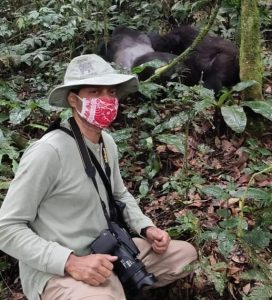
Once trackers locate the habituated gorilla family, visitors spend one magical hour observing them. During that time, guests watch feeding, grooming, and playful behavior. However, guides enforce a safe viewing distance to protect both humans and endangered mountain gorillas. As a result, gorilla trekking tours in Uganda combine adventure, conservation, and intimate wildlife encounters.
Notably, Uganda has achieved remarkable conservation success. Through tourism revenue, anti-poaching patrols, and community involvement, gorilla numbers continue to increase. Therefore, Uganda wildlife safaris directly support conservation. Furthermore, strict trekking regulations minimize disease transmission and habitat disturbance. As a result, Bwindi gorillas and Mgahinga gorillas thrive in protected ecosystems.
Ultimately, mountain gorillas in Uganda symbolize resilience, conservation success, and Africa’s natural heritage. Because Uganda safeguards these gentle giants so effectively, travelers experience one of the world’s most extraordinary wildlife encounters.